Whether you are choosing incense for your home, your yoga studio, a hotel property or a retail product range, it helps to understand what you are actually buying. Not all incense is the same — not in how it is made, how it burns, how long it lasts, how intense it smells or what kind of experience it creates. This guide covers every major format, plain and straightforward.
Incense Sticks
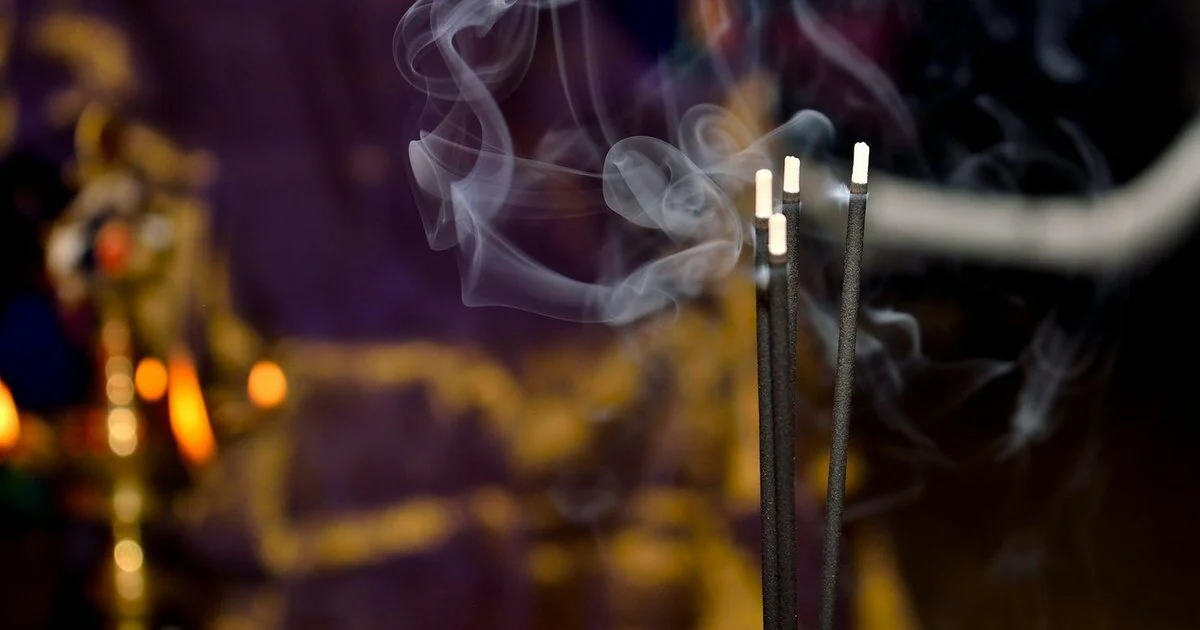
The most familiar format worldwide. A thin bamboo stick coated with an aromatic paste. You light the tip, let it catch for a few seconds, blow out the flame and let the glowing ember work its way down.
Masala sticks (like Mother Incense) use a blend of ground herbs and spices as the entire burning material. They produce a rich, complex, layered smoke that shifts character as it burns through the blend — you may notice one note at the start and a different one in the middle. No charcoal. No synthetic fragrance oil.
Charcoal-based sticks use a charcoal core coated in fragrance oil. They are the most common commercial format. They burn consistently strong from tip to base, but the fragrance is usually synthetic and the combustion involves charcoal byproducts. Read more on why this matters.
Incense Cones
A cone is a compressed mass of aromatic material — no stick, no inner core. You light the tip, let it catch and place it on a heat-safe dish, cone holder or incense burner. The cone burns down from the tip to the base, producing a column of smoke that tends to be more concentrated in the early stages than a stick.
Standard cones contain a charcoal base that sustains their own combustion — light and leave.
Charcoal-free cones (like Mother Incense cones) contain only herbal and spice material and require an external heat source to smoulder. They are placed on a glowing charcoal disc or on the warming plate of an electric bakhoor burner. They will not sustain their own flame — that is by design, not a defect. The result is a slower, cooler, cleaner release of fragrance.
Dhoop
Dhoop is a solid cylinder or log of compressed aromatic material with no bamboo core at all — just a dense column of the blend itself. It stands upright in a dedicated holder and burns from the top down. Traditional dhoop formulations tend to be resin-rich and produce thick, heavy, billowing smoke.
Dhoop is a common format in Indian temples and household puja settings. It burns longer than a stick and produces significantly more smoke, making it better suited to larger or outdoor spaces. It is not ideal for small rooms where smoke could become overwhelming.
Resin Incense
Resins — frankincense (boswellia), myrrh, benzoin, copal, labdanum — are the original form of incense used in ancient Egypt, Greece, the Vedic tradition and the Arabian Peninsula for thousands of years. A small chunk of resin is placed on a burning charcoal disc (in a heat-safe censer) and the heat causes it to melt, bubble and release fragrant smoke gradually.
Resin incense is as natural as incense gets: it is literally tree sap — dried, solidified and harvested by hand. The fragrance from quality Ethiopian or Omani frankincense is deep, complex, slightly citrus-medicinal, and cannot be convincingly replicated by any synthetic. This is the format that commands the attention of serious aromatherapy practitioners and incense connoisseurs.
Frankincense resin contains boswellic acids studied for anti-inflammatory properties and compounds like incensole acetate, which research has associated with mood regulation — giving "burning incense for calm" a biochemical basis.
Bakhoor
Bakhoor is a deeply rooted Arabic fragrance tradition using wood chips — typically agarwood (oud), the rarest and most expensive aromatic wood in the world — combined with resins, musk, rose water, amber and spice, then formed into chips or a paste. It is placed on an electric burner or a charcoal disc and allowed to slowly heat rather than combust.
The scent of quality bakhoor is extraordinary: deep, woody, animalic, complex, long-lasting. It is used across the Arabian Gulf in homes, on clothing and as a form of welcome and hospitality — guests are offered bakhoor as an act of generosity. The category is increasingly sought after in Western luxury home fragrance markets, driven by a growing appreciation for Middle Eastern fragrance culture.
Our electric bakhoor burners are designed specifically for the temperature range that maximises bakhoor diffusion — no open flame, no risk, just sustained fragrance. They also work perfectly with our charcoal-free incense cones.
Quick Comparison
| Type | Burn Time | Strength | Best For |
|---|---|---|---|
| Masala sticks | 30–60 min | Medium | Daily use, meditation, puja, retail |
| Charcoal sticks | 30–45 min | Medium–high | High-volume retail |
| Cones (charcoal) | 20–30 min | Medium–high | Gifting, display, short sessions |
| Cones (charcoal-free) | 20–35 min | Medium | Clean fragrance, burner use |
| Dhoop | 45–90 min | High | Ritual, outdoor, large spaces |
| Resin | 5–15 min/piece | High | Connoisseur, aromatherapy, ceremony |
| Bakhoor / Oud | 30–60 min | Very high | Luxury retail, Gulf market, hospitality |
Which Formats Should You Stock?
Incense sticks are the highest-volume, lowest-barrier entry point for any incense retail range. Everyone knows how to use them, they are safe and simple to display and the variety of fragrances is enormous. If you are starting an incense category, begin here.
Cones and dhoop add visual interest to a display and appeal to customers who want something slightly different. Cones in particular work well in gifting sets alongside sticks.
Resin and bakhoor attract experienced buyers and connoisseurs who already know what they want. They command significantly higher margins but require a little more shelf space and, in some cases, an associated burner or censer. The customer who buys quality resin or bakhoor is a loyal, high-value customer.
At Jaygee Industries, we supply all of these formats — natural masala sticks and charcoal-free cones under the Mother Incense label, plus a full range of branded incense, sambrani, dhoop and complementary aromatics across our portfolio of brands. If you want to build a cohesive, well-curated incense range for your market, reach out to our B2B team and we will put together a recommendation based on your customers and your channel.